
It usually happens at night or first thing in the morning. A bang like a gunshot comes from the garage, loud enough that half the neighborhood hears it. The next morning you press the wall button, the opener strains, the door lifts two inches and stops, and your car is stuck behind it.
Nothing is broken into and nothing is on fire. A garage door spring snapped, and that single part is what was holding up roughly one hundred and fifty to four hundred pounds of door.
This guide walks through what those springs actually do, the difference between torsion and extension systems, how to confirm a break in under a minute, and why broken garage door spring repair in Phoenix is one of the few home repairs where the honest advice is to stop and call someone. If you already know what you are looking at, skip ahead and book broken spring replacement and we will handle the rest.
In This Article
What A Garage Door Spring Actually Does
Most homeowners assume the opener lifts the door.
Torsion Vs. Extension Springs
There are two counterbalance systems on residential doors in the Valley, and knowing which one you have tells you a lot about what comes next.
How To Tell A Spring Is Broken
You can confirm this from the floor in about sixty seconds.
Why Phoenix Doors Snap Springs Sooner
Springs are rated in cycles, not years.
What A Garage Door Spring Actually Does
Most homeowners assume the opener lifts the door. It does not. A half horsepower opener could never lift a four hundred pound insulated double door thousands of times without burning out in a month.
The springs do the lifting. They store energy when the door closes and release it when the door opens, counterbalancing the weight of the panels so the door behaves as if it weighs eight to ten pounds. The opener only nudges that balanced load the rest of the way and holds it in position.
That is why a broken spring is not an opener problem. The opener is fine. It is just suddenly being asked to do a job it was never built for, and if you keep pressing the button it will strip its gear or trip its thermal cutoff trying. Unplug it.
It also explains the scale of the danger. A torsion spring on a standard Phoenix two car door is wound to somewhere north of two hundred pounds of stored force. All of that energy is sitting in a steel coil above your head every single day.
Torsion Vs. Extension Springs
There are two counterbalance systems on residential doors in the Valley, and knowing which one you have tells you a lot about what comes next.
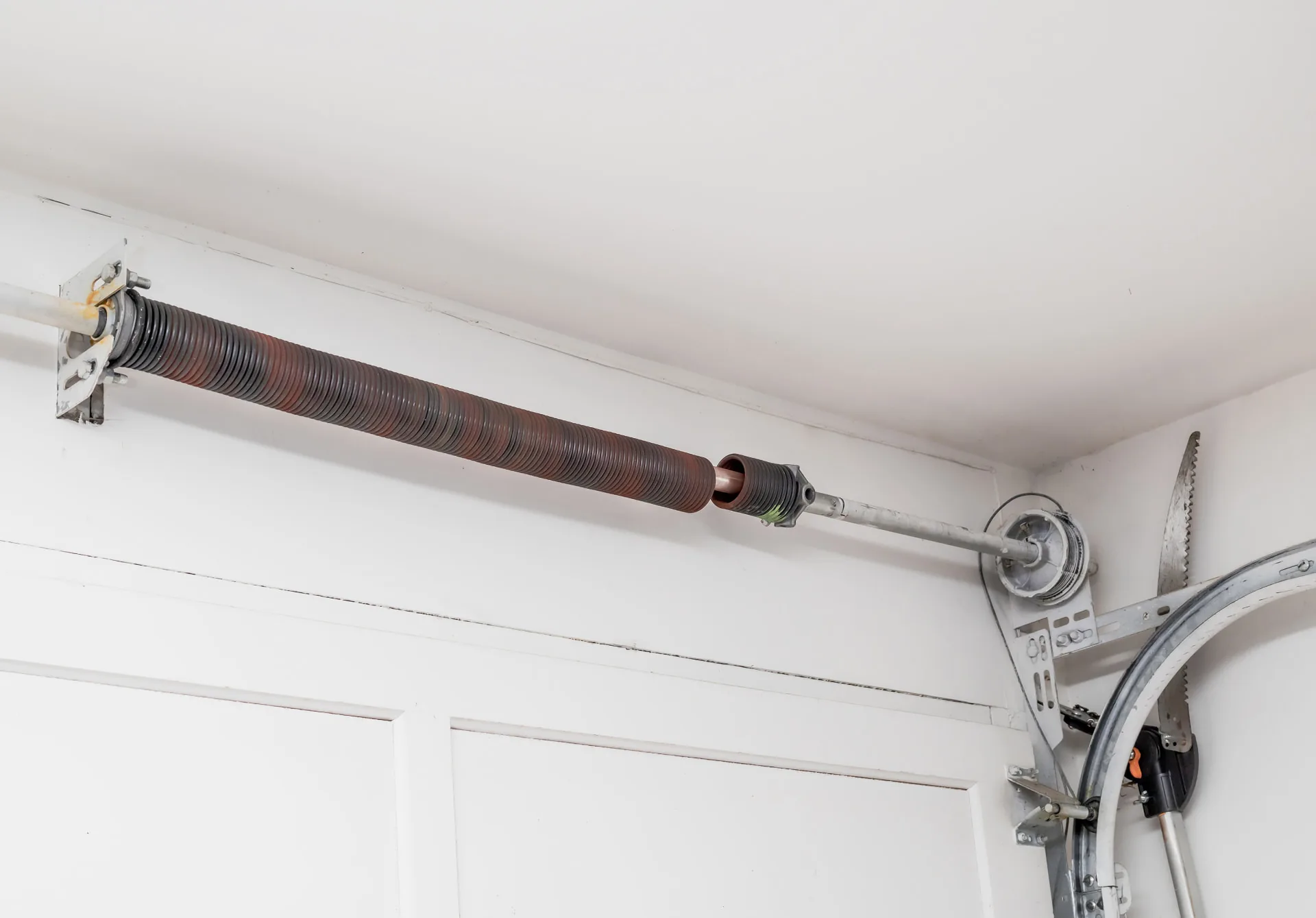
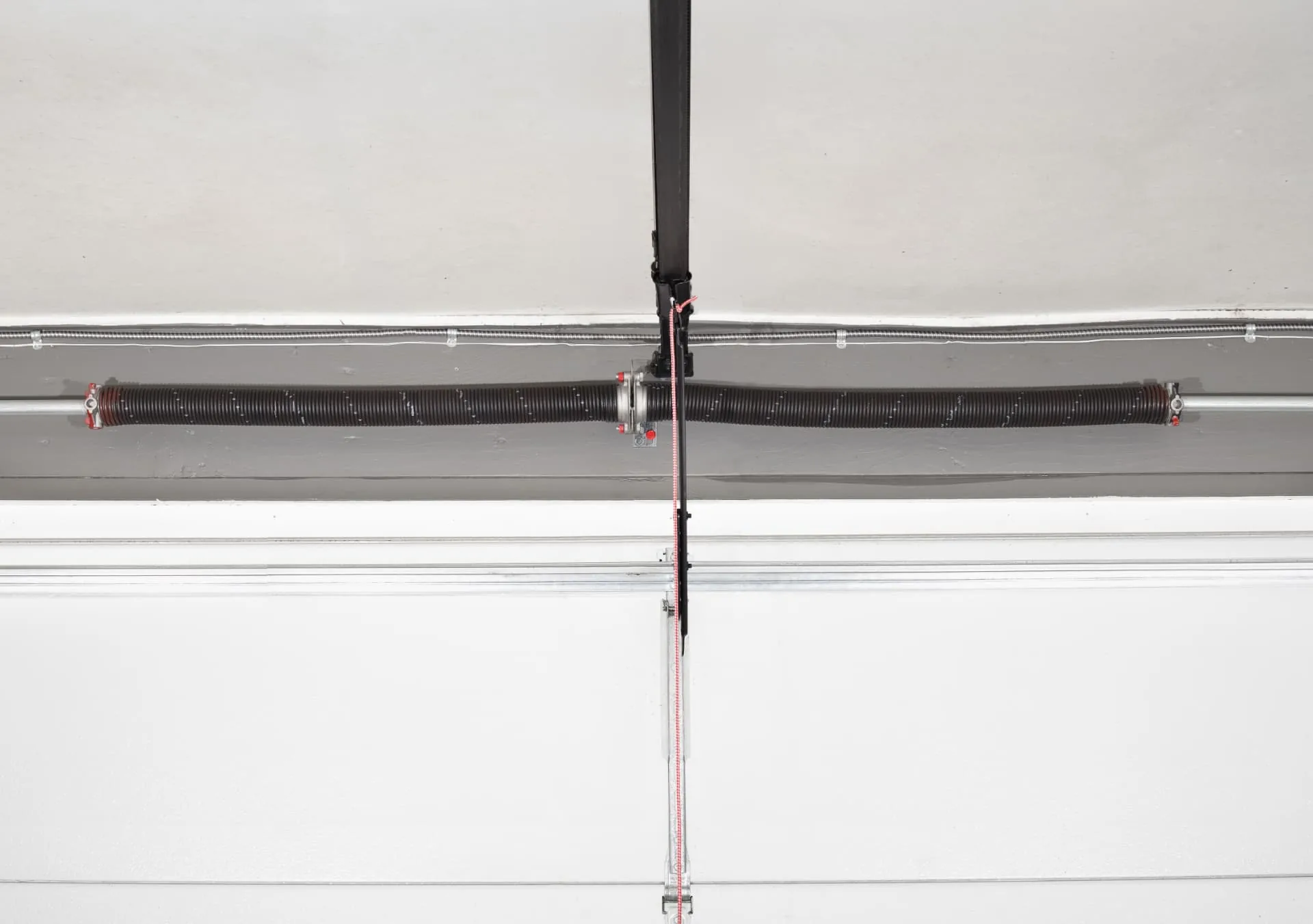
Torsion springs mount horizontally on a steel shaft above the door opening. They twist as the door moves and drive cable drums at each end. Almost every door built or replaced in Phoenix, Scottsdale, Glendale, and Peoria in the last twenty five years uses torsion.
Extension springs run horizontally along the upper tracks on either side of the door. They stretch as the door closes and contract as it opens. You mostly find them on older, lighter doors, single car doors, and detached garages in established neighborhoods around central Phoenix and Glendale.
If you have extension springs without containment cables running through the middle of them, that is worth addressing at your next service visit regardless of whether anything is broken. Without that cable, a snapped extension spring becomes a projectile.
| Feature | Torsion Springs | Extension Springs |
|---|---|---|
| Location | Shaft above the door opening | Along both upper side tracks |
| Typical life | 10,000 to 30,000 cycles depending on rating | 7,000 to 10,000 cycles |
| Door control | Smooth, balanced, quieter travel | More bounce and side to side sway |
| Failure behavior | Loud bang, door stays down | Spring can whip across the garage |
| Safety hardware | Shaft contains the spring if it breaks | Requires containment cables |
| Best for | Double, insulated, and heavy doors | Light single doors and older builds |
If you have extension springs without containment cables running through the middle of them, that is worth addressing at your next service visit regardless of whether anything is broken. Without that cable, a snapped extension spring becomes a projectile.
How To Tell A Spring Is Broken
You can confirm this from the floor in about sixty seconds. Do not touch anything, just look.
The hardest part is what you do next, because everything about a broken spring tempts you to just get the car out.
Visible Gap In The CoilWalk under the door and look up at the shaft. A torsion spring that has broken shows a clean two to four inch gap where the coil separated. This is the single most reliable sign.
Door Lifts A Few Inches Then StopsThe opener engages, moves the door slightly, senses the full weight, and reverses or gives up. Classic snapped spring behavior.
Opener Straining Or HummingThe motor runs but the door does not move, or it moves in a slow labored crawl. Stop pressing the button.
Door Hangs CrookedOne side rides higher than the other. Common when one of a pair has broken or when a cable has come off its drum.
Loose Or Hanging CablesSlack cable means the tension that kept it wound on the drum is gone.
You Heard A BangHomeowners across Anthem, Cave Creek, and New River describe it the same way every time. If you heard it and the door will not open, you already know the answer.
Why Phoenix Doors Snap Springs Sooner
Springs are rated in cycles, not years. One cycle is one full open and one full close. A standard builder grade spring is rated around ten thousand cycles, which sounds enormous until you count actual use.
A Valley household that leaves twice in the morning and returns twice in the evening runs four cycles a day, plus the trash, plus the kids, plus the garage as the real front door, which it is in almost every master planned community from Anthem to Gilbert. Six to eight cycles a day is normal. That is a seven year spring burned through in four.
Then the climate accelerates it. Steel loses a measurable amount of tensile strength when it sits at one hundred and fifteen degrees in an unconditioned garage all summer, and it contracts again when a November night drops forty degrees after sundown. That expansion and contraction cycle works micro cracks through a coil that is already carrying enormous load.
Fine desert dust makes it worse. Grit packs into the coils and onto the torsion shaft, increasing friction on every rotation and stripping away whatever factory lubrication was left. The same dust that fouls tracks and rollers is quietly sanding your springs.
Add the end of summer, when families come back from travel and the door runs constantly again, and September through January becomes the busiest stretch of the year for emergency spring replacement across Arizona.
Add the end of summer, when families come back from travel and the door runs constantly again, and September through January becomes the busiest stretch of the year for emergency spring replacement across Arizona.
Never Replace A Spring Yourself
This is the part of the article where most contractors write a soft warning. We are not going to.
Garage door springs are the most dangerous component in a typical home. A wound torsion spring holds hundreds of pounds of force in a coil that is inches from your face while you work on it. Winding bars are not screwdrivers, and a slipped bar becomes a steel projectile traveling at the speed of a thrown hammer. Emergency rooms in Maricopa County treat these injuries every year, and they are not minor ones. Broken hands, shattered teeth, and lost fingers are the standard outcomes.
There is also a quieter failure mode. Replacing a single spring on a two spring door leaves the system unbalanced, which throws the load onto the opposite cable and drum, chews through the opener, and usually leads to an off track garage door repair within a few months.
Wrong wire size, wrong inside diameter, wrong length, or the wrong number of turns all look fine on day one and fail early. Springs are engineered to a specific door weight, and matching them is measurement work, not guesswork.
The tools alone cost more than the service call. This is a job where the professional option is genuinely the cheaper one.
What You Can Safely Do Right Now
There are a few things worth doing while you wait for a technician, and one big thing to avoid.
If your car is trapped and you need to be somewhere, say so when you call. A technician can safely lift and secure the door manually far faster than you can improvise a fix, and same day emergency spring replacement across the Valley is exactly what we staff for.
Unplug The OpenerPull the plug at the ceiling outlet. This stops anyone in the house from trying the button again and stripping the drive gear.
Leave The Door ClosedA closed door with a broken spring is stable. A partially open one is not, and it can come down hard.
Do Not Pull The Emergency Release Under LoadIf the door is open and the spring is broken, that red cord disconnects the only thing holding it up. Wait for a technician.
Keep Kids And Pets Out Of The GarageTreat the door as unsafe until it is repaired.
Note What You Heard And SawWhen it happened, what it sounded like, whether the door was opening or closing. It helps us bring the right springs on the first trip.
What A Professional Replacement Includes
A correct spring job is more than swapping a coil. Here is what actually happens on a proper visit.
Most single door spring replacements are done in about an hour. Doubles and heavier insulated doors take a little longer.
Weigh And Measure The DoorThe spring is sized to the real weight of your door, not a generic chart.
Replace Springs In Matched PairsIf one broke, the other is the same age and the same number of cycles from failing. Replacing both is the only version of this repair that makes sense.
Inspect Cables, Drums, And BearingsA snapping spring shocks the whole system. Frayed cables and worn end bearing plates get caught here or they cause the next failure.
Set The Correct Turns And BalanceThe door should hold position on its own at waist height and at shoulder height when disconnected from the opener. That is the test that proves the counterbalance is right.
Check Rollers, Hinges, And Track AlignmentCheap to address while the door is already apart.
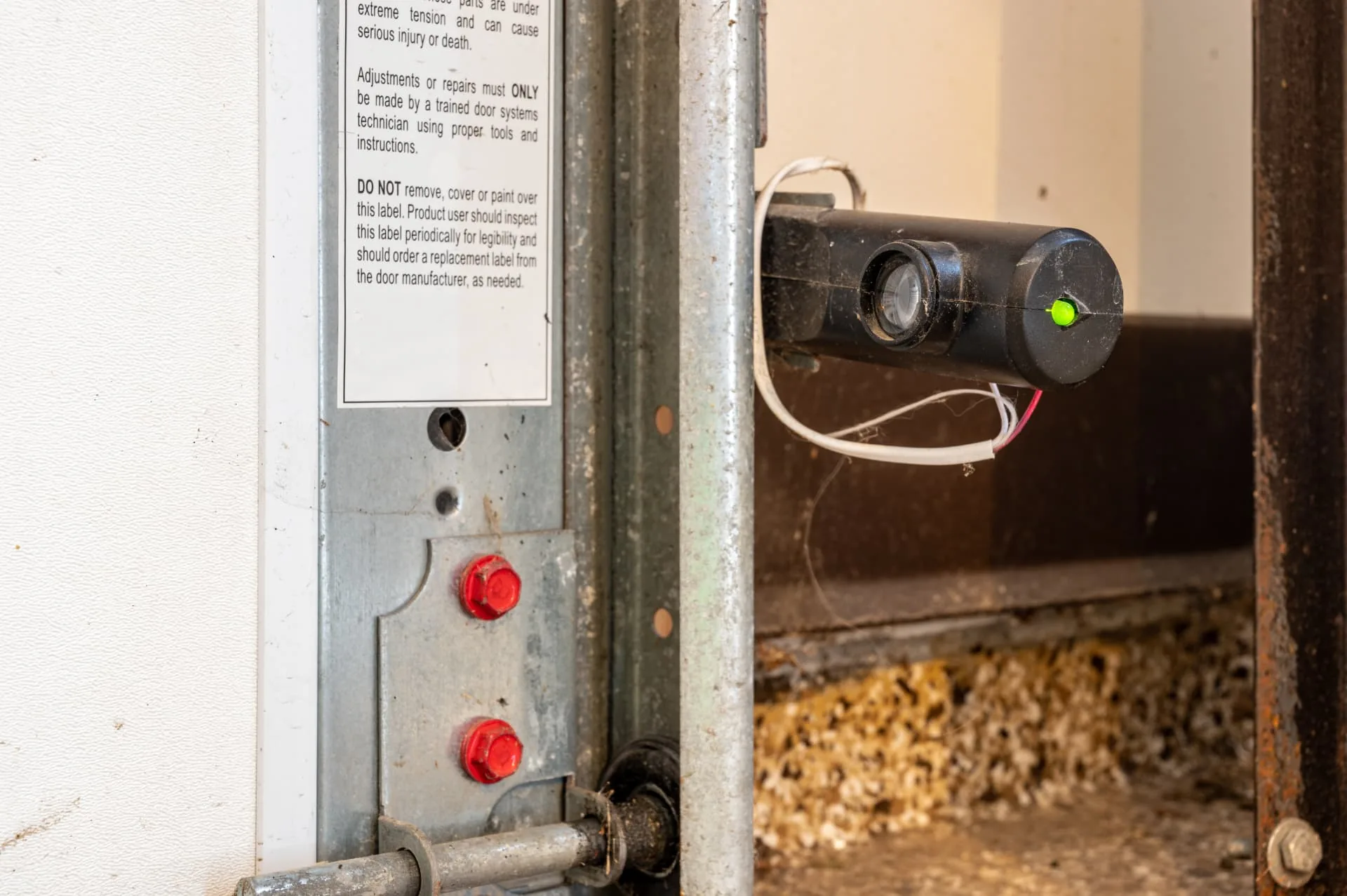
Test The Opener And Safety ReverseForce settings and photo eye alignment get verified before we leave. If the opener took damage while it was fighting a dead spring, we will tell you, and garage door opener repair is handled on the same visit.
Making The Next Set Last Longer
You cannot make springs immortal, but you can push them well past their rated life.
Ask About Cycle Rated SpringsStepping up from a ten thousand cycle spring to a twenty five or thirty three thousand cycle spring is a modest upgrade at install time and often doubles or triples the service life. On a garage that runs eight cycles a day in Scottsdale or Peoria, that math is not close.
Lubricate Twice A YearA light coat of garage door specific lubricant on the torsion coils, hinges, rollers, and bearings. Skip WD-40, which strips lubrication rather than adding it, and skip grease, which catches desert dust.
Keep The Door BalancedIf the door feels heavy when disconnected, or drifts up or down instead of holding, the counterbalance is off and the springs are working harder than they should.
Have It Inspected AnnuallyWorn coils, rust spotting, frayed cable strands, and drifting balance are all visible long before the bang. This is the whole value of a maintenance visit.
Run It Less Where You CanEvery avoided cycle is life left in the spring.
Broken Spring FAQs For Arizona Homeowners
Can I Manually Open My Garage Door With A Broken Spring? Technically yes, safely no, not alone. With the counterbalance gone you are lifting the full dead weight of the door, which on a two car insulated door in most Valley homes runs two hundred and fifty pounds or more. It takes two strong adults, and the moment either one loses grip the door comes down. If a vehicle is trapped and you need it out today, call and let a technician lift and block the door properly. That part takes minutes.
How Long Does Garage Door Spring Replacement Take? A standard torsion pair on a residential door is usually an hour of work once the technician is on site, including the balance test and safety checks. Heavier doors, extension to torsion conversions, and jobs that turn up bad cables or a worn end bearing plate take longer. Because we stock common spring sizes on the trucks, most calls across Phoenix, Scottsdale, Glendale, Anthem, and Cave Creek are single visit repairs rather than order and return jobs.
If One Spring Broke, Why Replace Both? Because springs are installed as a matched pair on the same day and run the identical number of cycles. When one reaches the end of its fatigue life, the other is within weeks or months of the same point. Replacing only the broken one means a second failure, a second service call, and an unbalanced door in the meantime that overworks the opener and the remaining cable. On a two spring door, replacing the pair is the standard and it is the only approach we recommend.
Does Phoenix Heat Really Shorten Spring Life? Yes, though not in the dramatic way people expect. The spring does not melt or soften on a hot day. What happens is repeated thermal cycling, a garage interior at well over one hundred degrees in July followed by sharp overnight drops in the cooler months, which expands and contracts steel that is already under permanent load. Combine that with fine dust in the coils increasing friction, and Valley springs commonly reach the end of their rated cycle life noticeably earlier than the same spring would in a mild climate.
Will My Homeowners Insurance Cover A Broken Spring? Almost never. Standard policies treat spring failure as normal wear and tear rather than sudden accidental damage, and wear items are excluded. The exception is when a spring fails as part of a covered event, such as a vehicle striking the door or storm damage to the door assembly. If a car hit your door or a monsoon gust bent the structure, document it with photos before any repair and talk to your carrier first.
Why Did My Spring Break In The Middle Of The Night? Because the door does not have to be moving for a spring to fail. It holds tension continuously, and when the garage cools rapidly after sunset the steel contracts and the stress on an already fatigued coil spikes. That is why so many homeowners hear the bang at two in the morning and find the failure the next day. It also explains the seasonal pattern we see every year, with calls climbing through the fall as overnight temperature swings widen across the North Valley.
Do You Service My Part Of The Valley? We cover Phoenix, Scottsdale, Glendale, Peoria, Anthem, Cave Creek, Carefree, New River, and Black Canyon City, along with the surrounding North Valley communities. The full list is on our service area page, and if you are just outside it, call anyway and we will tell you straight whether we can get to you.
Stuck Behind A Dead Door Today
A snapped spring is not something to sleep on and it is not something to experiment with. The door is not going to fix itself, and every attempt to force it open with the opener adds an opener repair to the bill.
Unplug the opener, leave the door down, keep everyone clear of it, and get a technician out. Arizona Garage Door Pros is a licensed and insured local contractor, we carry common spring sizes on the truck, and we replace in matched pairs with a full balance and safety check before we leave.
Call (602) 574-4551 or request same day service and we will get your car out and your door working again.
Need Garage Door Service In The North Valley?
Talk to Jay directly. Honest diagnostics, fair pricing, and no pressure to buy anything you do not need.